What is an oxygen absorber?…
An oxygen absorber is a small sachet containing a granulate with a mixture of different compounds, including iron, covered by a specialised paper that is permeable to oxygen. Iron in contact with moisture and oxygen forms rust, requiring and consuming oxygen as a result of the chemical reaction itself.
As a result of the reaction, the environment has an oxygen concentration of 0.1% or less). The absorption process stops when all the iron dust has been oxidised.
One of the peculiarities of the oxidation process is that the envelope becomes slightly warm to the touch when in operation.
DOX envelopes are resistant to water, dust and oil.
The elimination of oxygen inside the sachets minimises the harmful effects of oxygen on food products, which prolongs their shelf life.
It also reduces the need for food additives that can have potential adverse effects on the human body.
The oxygen absorber is effective in suppressing the growth of moulds and other aerobic microorganisms, preserving the original taste, flavour and texture of the food.
It also helps prevent colour and odour changes and reduces nutrient loss.
We comply with EU and FDA food contact regulations as well as BRC standards.
How does an oxygen absorber work?
The air we breathe, which constitutes our atmosphere, is composed mainly of nitrogen (78%), oxygen (21%), varying amounts of water vapour, argon (0.9%) and carbon dioxide (0.04%).
Therefore, the residual air inside packages of food or perishable goods is in principle composed of this gas mixture, unless gas (either nitrogen, CO2 or mixtures of these gases) is injected into the packages of perishable goods.
In either case, adding an oxygen absorber to the sealed package removes all the oxygen and leaves only the remaining gases, such as nitrogen and other inert gases, inside the container.
Problems solved by oxygen absorbers
- Prevent oxidation: Oxygen negatively affects and damages the colour, flavour and nutrient levels of food. Absorbents prevent oxidation, which helps preserve the overall quality of packaged foods.
- They prevent rancidity and maintain freshness: fatty or oily foods, when oxidised, can develop an unpleasant taste. By using oxygen absorbers we guarantee flavour stability, keeping the original flavour intact over time.
- Extend shelf life: the removal of oxygen suppresses the growth of oxygen- dependent bacteria, mould and other microbes, irrespective of the water activity of the product. This prevents spoilage and extends shelf life.
- Nutrient retention: by preserving essential nutrients, foods maintain their nutritional profile.
- Minimise artificial additives: the need for preservatives can be reduced or eliminated, in line with the trend towards healthy eating and labelling.
- Improve food safety levels, as harmful microbial growth is reduced in reduced oxygen environments.
Preservation of oxygen absorbers
Oxygen absorbers are packaged in near total oxygen barrier and vacuum bags. This vacuum is provided regardless of the format: i.e., both for bulk oxygen absorbers, intended to be placed manually by the customer into the packaging, and for absorbers in rolls, intended to be placed by a dispensing machine that becomes part of the customer’s production line.
When, for various reasons, a vacuum cannot be achieved, we could place an oxygen detection indicator to reassure the customer that even with an imperfect vacuum the product is still in perfect condition.
In most cases, however, it is very easy to determine whether the vacuum is correct with a simple optical and manual check.
In this case, the vacuum can be seen visually by looking at the hole in the lid on the roll shaft. If the vacuum protection film is pressed inwards, the vacuum is correct. If it returns to its initial state when pressed outwards, even if it takes some time, we would have a complete verification of a complete and fully efficient vacuum.
Other important storage conditions:
- Vacuum packed absorbents should be stored in their original cardboard box at room temperature (no higher than 30°C even in summer) and avoiding exposure to direct sunlight.
- The period of effectiveness is 6 months after shipment.
- Oxygen absorbers cannot be reused.
Other important storage conditions:
- Vacuum packed absorbers must be stored in their original carton at room temperature (not above 30°C even in summer) and avoiding exposure to direct sunlight.
- The period of effectiveness is 6 months after shipment.
- Oxygen absorbers cannot be reused.
Applications

Grains and cereals
Oxygen absorbers maintain freshness, preventing rancidity and preserving texture

Bakery and confectionery products
Oxygen causes loss of freshness and flavour, as well as mould and rancidity.
Nuts and seeds
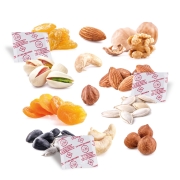
Exposure to oxygen causes nut and seed oils to go rancid. Oxygen absorbers preserve freshness and prevent off-flavours and insects.
Dried fruits
Removal of oxygen preserves their colour, flavour and nutritional values.
Coffee and tea
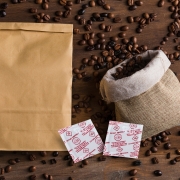
Exposure to oxygen can damage the aroma and flavour of coffee beans and tea leaves. Oxygen absorbers help maintain their freshness and flavour.
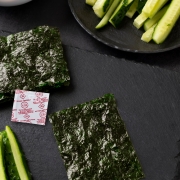
Spices and herbs
The flavour and fragrance of spices and herbs can deteriorate due to exposure to oxygen. Oxygen absorbers protect their potency and overall quality.
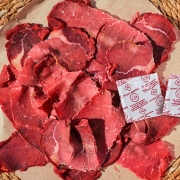
Dehydrated and freeze-dried foods
Moisture and oxygen deteriorate these foods. Oxygen absorbers maintain their stability and increase their shelf life.

Processed and packaged foods
An example of these are snack foods, for which oxygen absorption is very beneficial.

Cheese and dairy products
Oxygen absorbers help prevent oxidation of fats in cheese and dairy products, preserving their taste and texture.
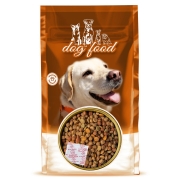
Pet foods
Oxygen absorption preserves their freshness and nutritional values.
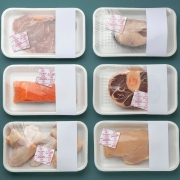
Meat, fish and poultry industry.
Meat, fish and poultry industry.
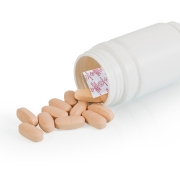
Pharma and medicines:
Oxygen removal preserves the active components and maintains their efficacy in APIs, vitamin C.
Frequently Asked Questions
What is an oxygen scavenger and how does it work?
The oxygen absorber is a sachet that is intended to absorb oxygen inside a closed container. Its main function is to prevent food spoilage caused by oxygen. Generally, this sachet is filled with iron powder, salt and natural clays, all contained in a porous bag.
How does an oxygen absorber work?
Oxygen absorbers work by harnessing the moisture present in the air and food to oxidise the iron particles contained in the sachet. This process removes oxygen from the packaging, creating an environment composed only of nitrogen, which contributes to a longer shelf life of the products.
What causes the D-OX sachet to heat up?
The sachet in contact with air generates the iron oxidation reaction, which is exothermic and may slightly increase the temperature of the sachet. The heat produced is low and does not represent a risk of burns or fire.
Is it common for D-OX sachets to heat up in the packaging phase of production?
In the event that a mylar bag with D-OX is left open or packages are removed one at a time, the heat produced by the chemical reaction can build up, which will cause the bag to feel hot. To avoid a reduction in performance, it is advisable to distribute the packets on a tray. D-OX types that are on a roll may become hot in use, but if used within the recommended usage time, their performance will not be compromised.
What signs indicate that my oxygen absorber is working?
New oxygen absorbers feel soft and dusty when squeezed, with no lumps appearing. In addition, they can give off heat on contact with air. In contrast, used or expired absorbers may be hard or lumpy to the touch.
What happens to oxygen adsorbents once they are exposed to air and how long do they take to activate?
When the oxygen absorber comes into contact with oxygen, it activates and begins to absorb oxygen from the environment. This process can take between 4 and 24 hours depending on the volume of air. Once the complete oxidation reaction has occurred, the absorber no longer functions. Although this may seem inconvenient, it is essential to know that the function of the sorbent is to remove oxygen from a closed package. If the package remains closed, its contents will remain free of oxygen. If you open the package, the contents will be exposed to oxygen and it will be necessary to replace the exhausted absorbents with new ones.
What factors should I consider in determining the proper DOX sachet size?
- Things to consider when determining the right size of oxygen absorbers are:
- The water activity of the product/food
- The oxygen transmission rate (OTR) of the packaging
- The volume of the sealed package
- The volume of the product inside the package.
Can D-OX be used in low temperature environments?
Oxygen is absorbed more slowly at low temperatures. However, since the deterioration of the product and the proliferation of microorganisms decreases, this slower rate of absorption should not be a disadvantage. It is also recommended to do an absorption test before use under these conditions.
Can vacuum packaging be used together with D-OX?
As vacuum packaging reduces the amount of air, a smaller version of D-OX can be used. The sachet will absorb what little residual oxygen remains and what enters over time through the film.
If I only use a small amount of D-OX at a time, will opening and resealing the mylar bag affect its performance?
It is not advisable to open and close the mylar pouch repeatedly, as this will cause the D-OX to be in constant contact with air. To avoid this, we recommend dividing the mylar bag of D-OX into small portions and storing them in bags made of high oxygen barrier materials to reduce the interaction between D-OX and the atmosphere.
What happens if a food with a D-OX sachet is heated in a microwave?
To prevent sparks, burns, or possible fire hazards, remove D-OX from the food package before microwaving.
-
- What happens if a food product containing a dox sachet was heated in a microwave.
- To prevent sparking, burning, or possible fire hazards, remove DOX sachet from the food container before microwaving.
Can a D-OX sachet be reused after initial use?
D-OX oxygen absorbers are for single use only. After opening the package, remove the D-OX sachet and dispose of it properly.
How should unused oxygen absorbers be stored?
Generally, oxygen absorbers should be used within 2 hours of opening the mylar bag. However, we recommend using or storing them within 15-30 minutes after opening the package. As you know, these pads remove oxygen, and air is 21% oxygen, so before opening the vacuum pack, make sure you are ready to use them and seal them quickly. Absorbents that you are not going to use should be stored in a glass jar or vacuum-sealed bag.
Keep in mind that once the package is opened, you will not be able to reseal it, so you will need a vacuum sealer to keep them as airtight as possible.
I have put oxygen absorbers in my bags and I see that they are not creating a vacuum in my packages, what is the reason for this?
Oxygen absorbers work by removing oxygen from the air. Air is made up of 21% oxygen and 79% nitrogen, so the adsorbent only acts on the oxygen. As a result, no vacuum will be generated in the packaging and it will not become rigid, as the remaining nitrogen maintains its volume. Sometimes the packaging may shrink due to this reduction, which will depend on the volume left over in the headspace, but the nitrogen will always remain inside.
Do I need to use oxygen absorbers if I am using vacuum packaging or nitrogen flush to package my products?
The above techniques aim to decrease the oxygen in the package. Vacuum packaging removes the air and seals the package, while nitrogen flushing replaces the oxygen with nitrogen, a denser gas. Despite this, a small percentage of oxygen (2-3%) remains. Oxygen absorbers are used to remove this remaining oxygen and any oxygen that enters through the film throughout its shelf life.
If I have to freeze my product, how will this affect the effectiveness of the oxygen absorbers?
At room temperature, the oxygen absorbers work efficiently, removing the oxygen within 24 hours at 25°C. At 6°C, the process is completed within 48 hours, while at 0°C to 4°C it can take up to 72 hours. As moisture content can vary significantly, we recommend that customers conduct their own tests.